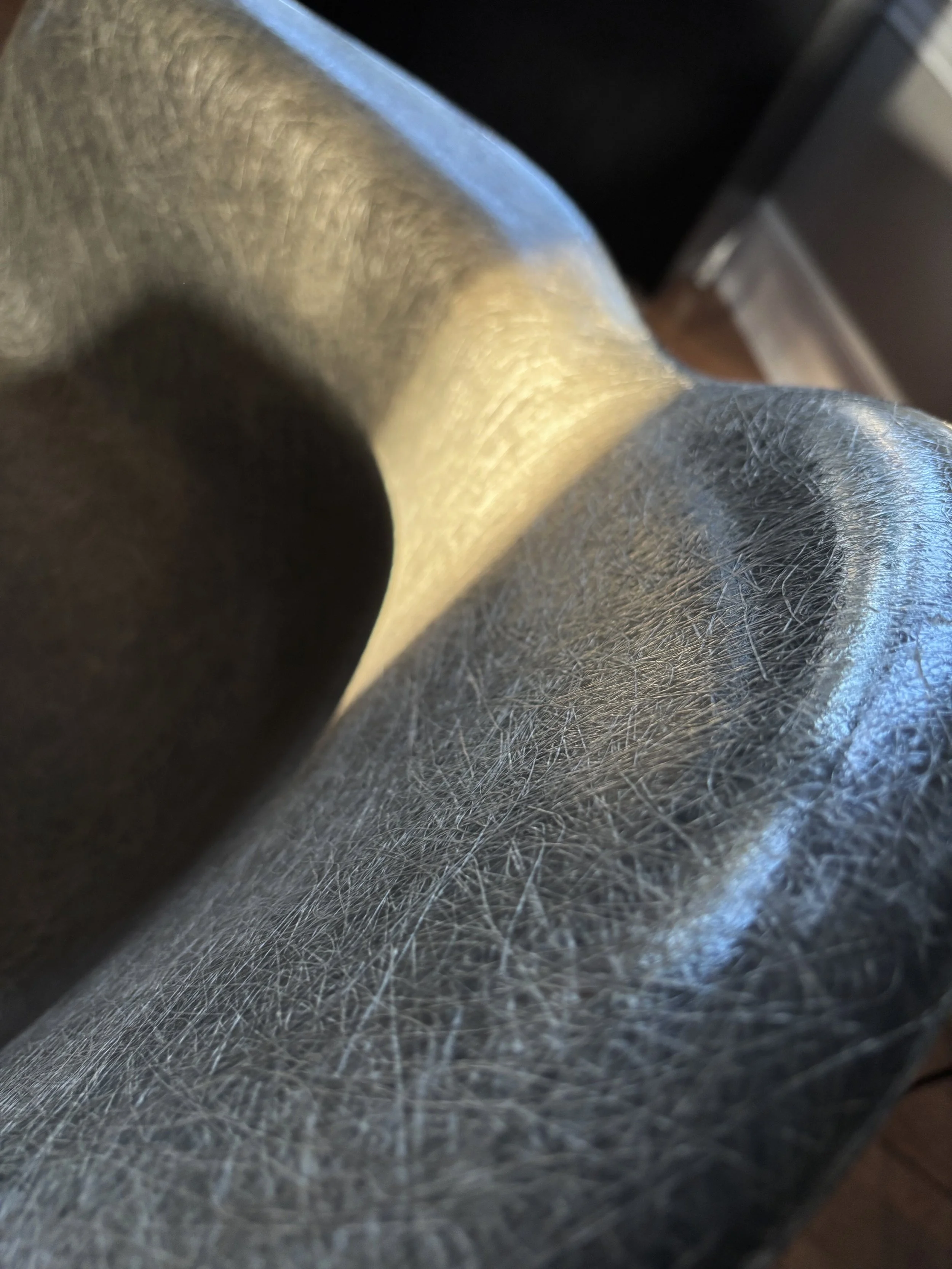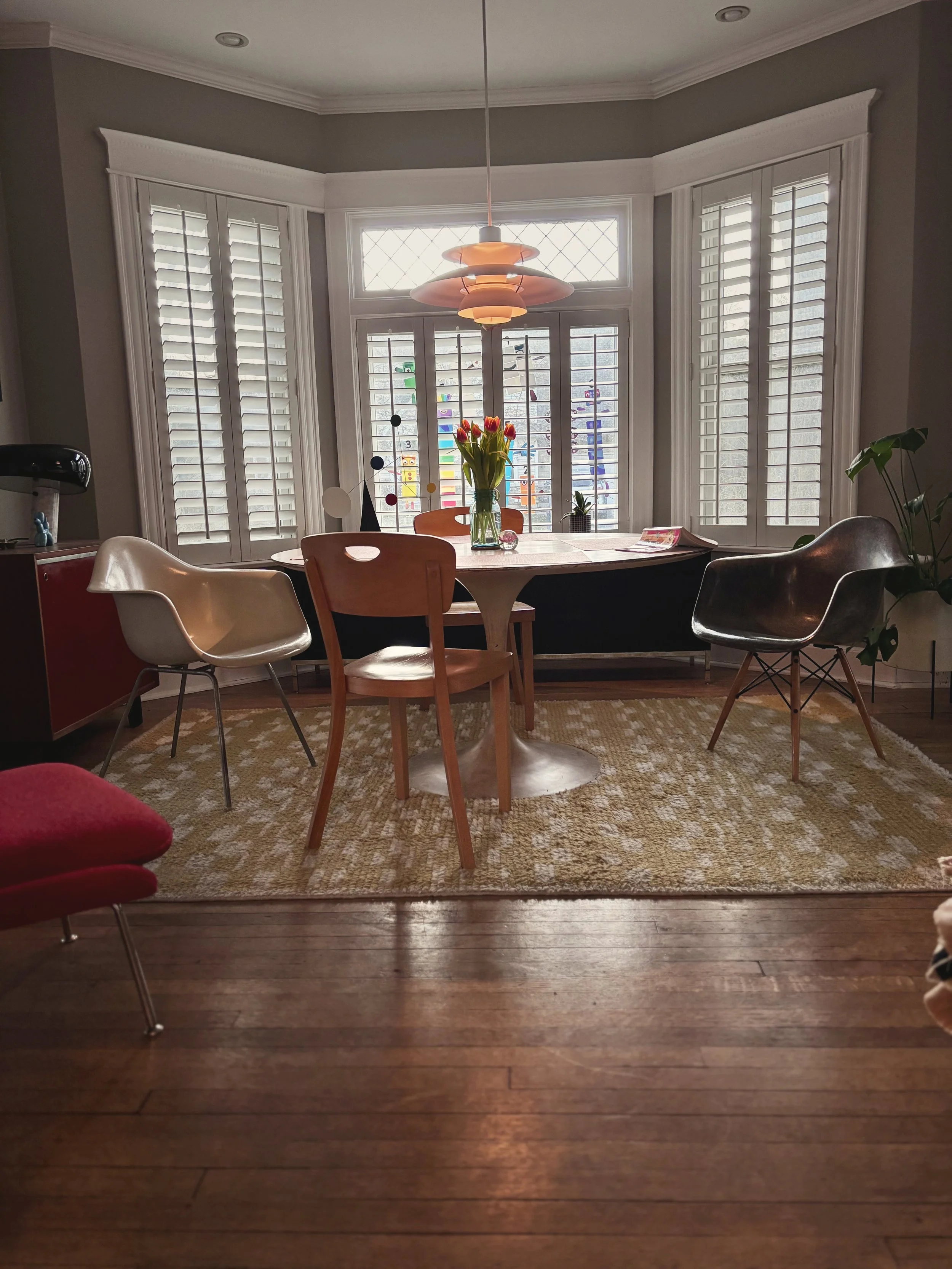
Curated mid-century and organic modern design. Highland Park, Illinois.
We sell sculptural pieces with real provenance — furniture shaped by Chicago's design tradition, meant to be lived with, not preserved.
Viewing by appointment.
josh@theprairiemodern.com
instagram: @theprairiemodern

Featured Pieces
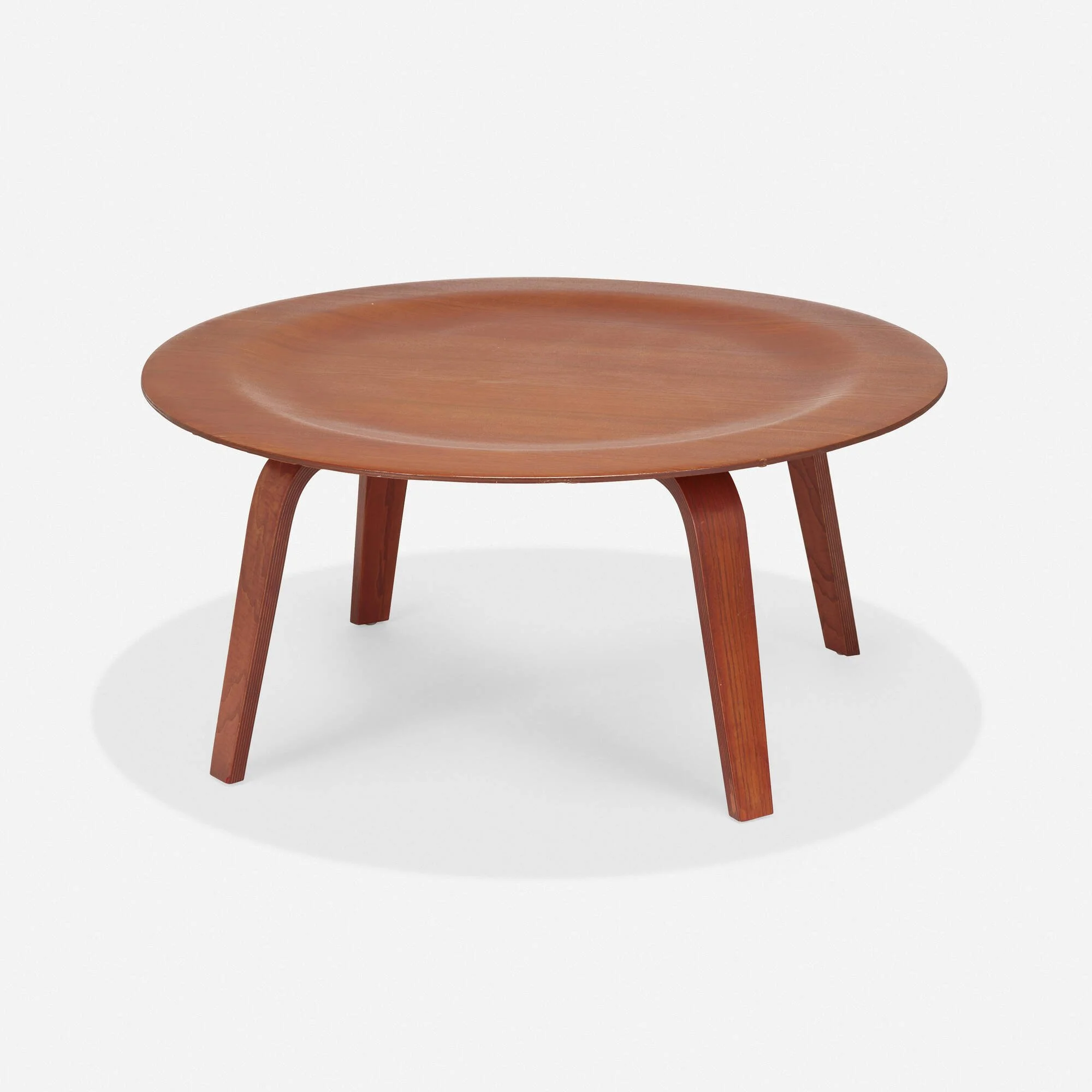
Charles and Ray Eames designed the CTW-3 in 1945 as part of their first furniture collection for Herman Miller — an attempt to bring honest materials and democratic design into the American home. The aniline dye process they used was deliberately transparent, letting the natural grain of the ash plywood show through rather than hiding it under opaque finish. The result is warm, almost sculptural — a table that reads as a single continuous form, bent plywood top flowing into bent plywood legs.
This example dates to c. 1955, early production, in a rich terracotta tone that's deepened beautifully with age. Clean and intact.
Herman Miller · USA · 1945, c. 1955 Aniline-dyed ash plywood 15½"h × 34" diameter (39 × 86 cm) Provenance: Alan Moss Gallery, New York
Interested in this piece? Reach out at josh@theprairiemodern.com or call/text 323.719.9242. Shipping and local delivery available — quoted per piece.
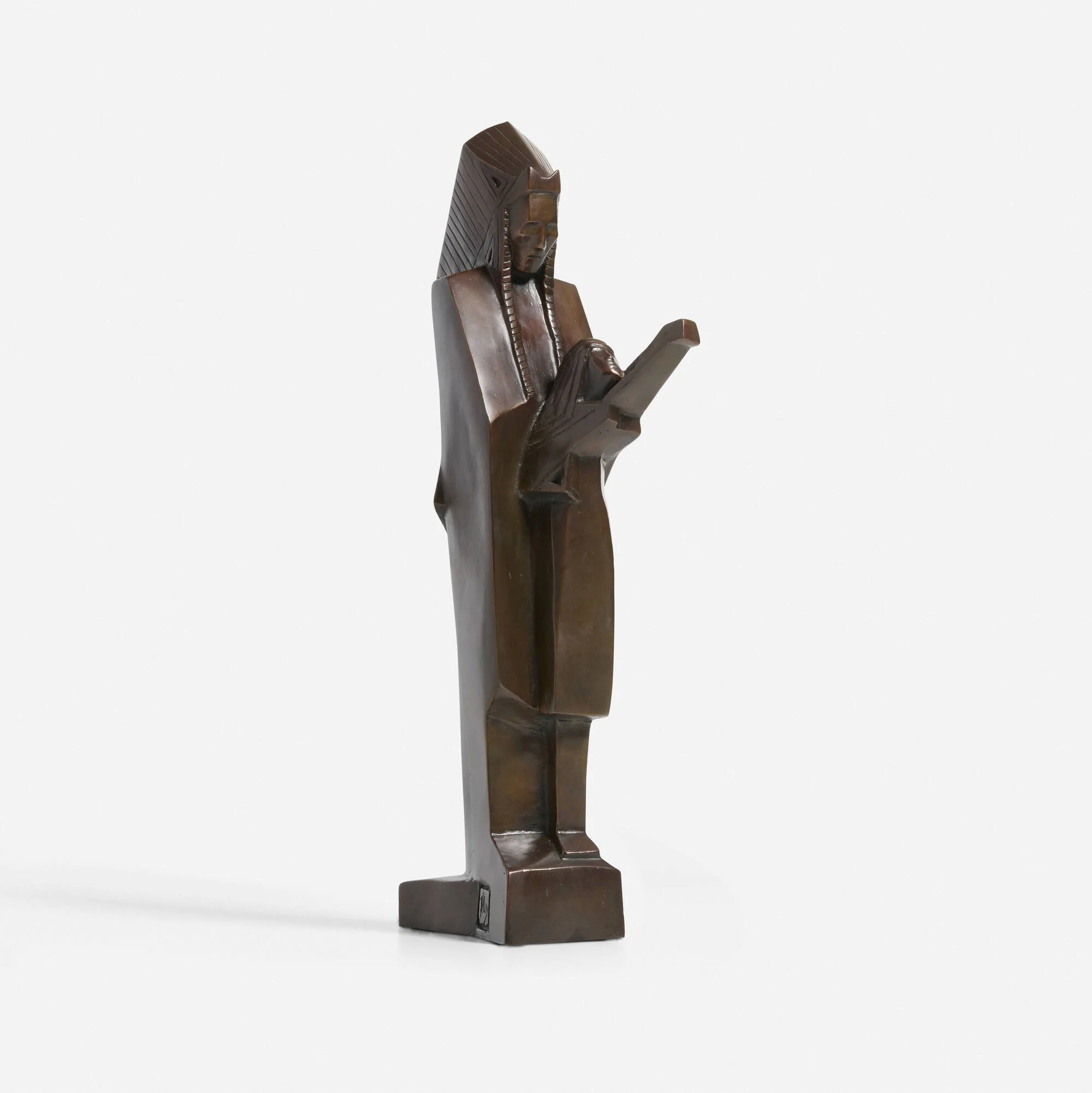
Frank Lloyd Wright conceived the Nakomis figure in 1929–1930 as part of a pair of monumental gateway sculptures for the Nakoma Country Club in Madison, Wisconsin — a commission that was never fully realized in his lifetime. The rectilinear warrior, teaching his son to shoot with a bow and arrow, embodies Wright's organic design philosophy: angular, purposeful, rooted in the American landscape.
This bronze is number 173 from a planned edition of 500, cast by Shidoni Foundry in Tesuque, New Mexico and published by Hubbard Associates, Aspen, to commemorate the fiftieth anniversary of the original design. Significantly fewer than 500 were produced before Shidoni permanently closed its bronze casting operations in 2017 — no additional pieces from this edition can be made. Sold with certificate of authenticity from the Frank Lloyd Wright Foundation.
Provenance: Galleries Maurice Sternberg, Chicago · Private Collection, Wilmette
After Frank Lloyd Wright · USA · conceived 1929–30, cast c. 2000 Patinated bronze · 17⅞"h × 4¼"w × 7½"d Edition 173/500 · FLW Foundation certified
Interested in this piece? Reach out at josh@theprairiemodern.com or call/text 323.719.9242. Shipping and local delivery available — quoted per piece.
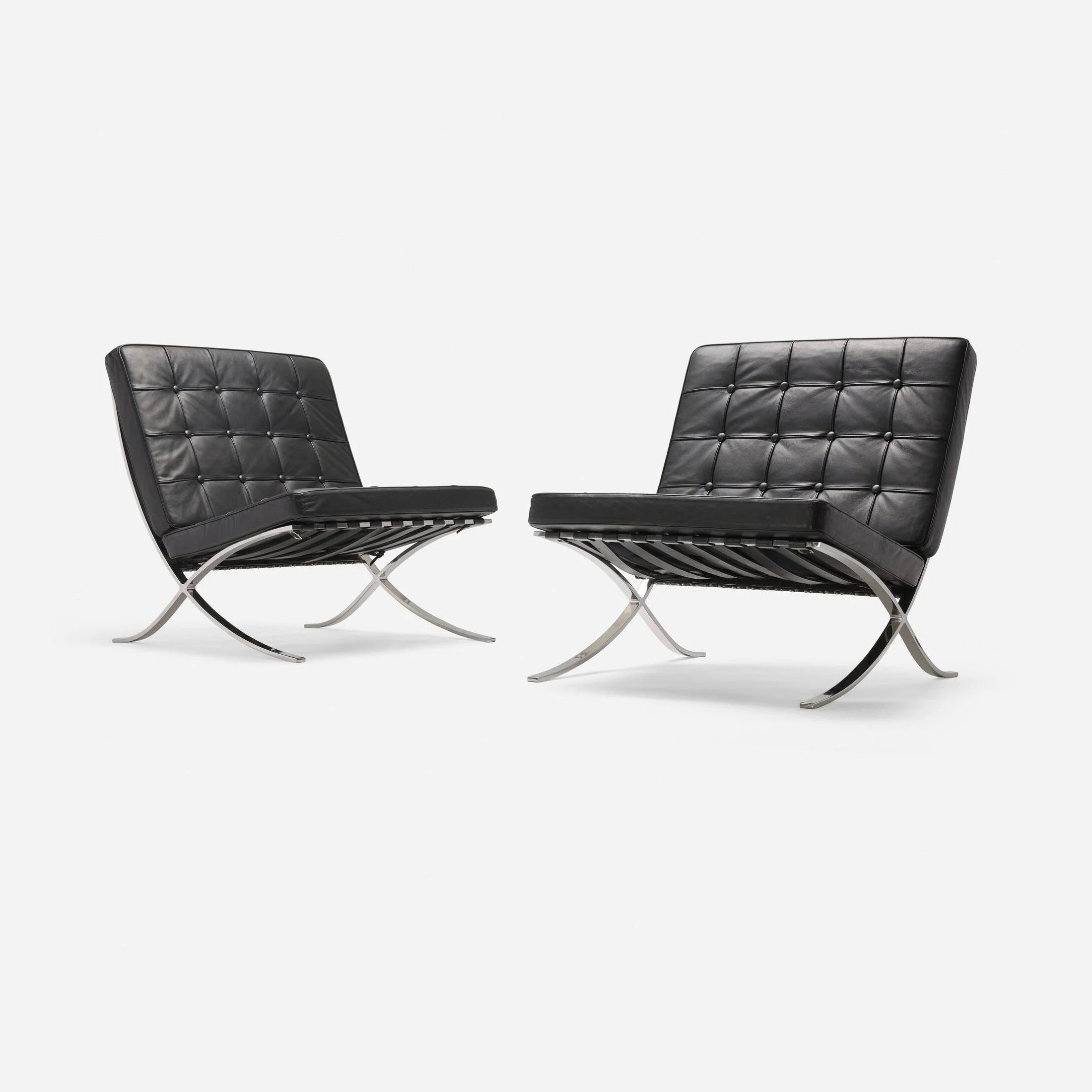
Ludwig Mies van der Rohe designed the Barcelona chair in 1929 for the German Pavilion at the Barcelona International Exposition — a chair fit for royalty, literally. He needed seating worthy of the King and Queen of Spain. Nearly a century later it remains one of the most recognized furniture designs ever made, still in production, still copied endlessly.
These chairs are something rarer than a typical vintage example: documented architectural provenance. Specified for the McGregor Memorial Conference Center at Wayne State University in Detroit, designed by architect Minoru Yamasaki with interiors by Florence Knoll — one of the defining American campus buildings of the postwar era, completed in 1958. Florence Knoll didn't specify furniture casually. Every piece in a Knoll interior was considered.
Stainless steel frames — not chrome, which is what most Barcelona chairs have, including Knoll's standard production today. Stainless is the premium specification: heavier, more refined, and increasingly rare in vintage examples. Black leather upholstery, c. 1960 Knoll Associates production. The leather has softened beautifully with age, the frames are clean and sharp. Ready for a living room, not a museum.
Priced individually. Four available — can be purchased singly or as a pair.
Provenance: McGregor Memorial Conference Center, Wayne State University, Detroit · Private Collection
Ludwig Mies van der Rohe · Knoll Associates · designed 1929, produced c. 1960 Leather upholstery, stainless steel 30"h × 30"w × 29"d
$4,750 per chair · Four available
Interested in this piece? Reach out at josh@theprairiemodern.com or call/text 323.719.9242. Shipping and local delivery available — quoted per piece
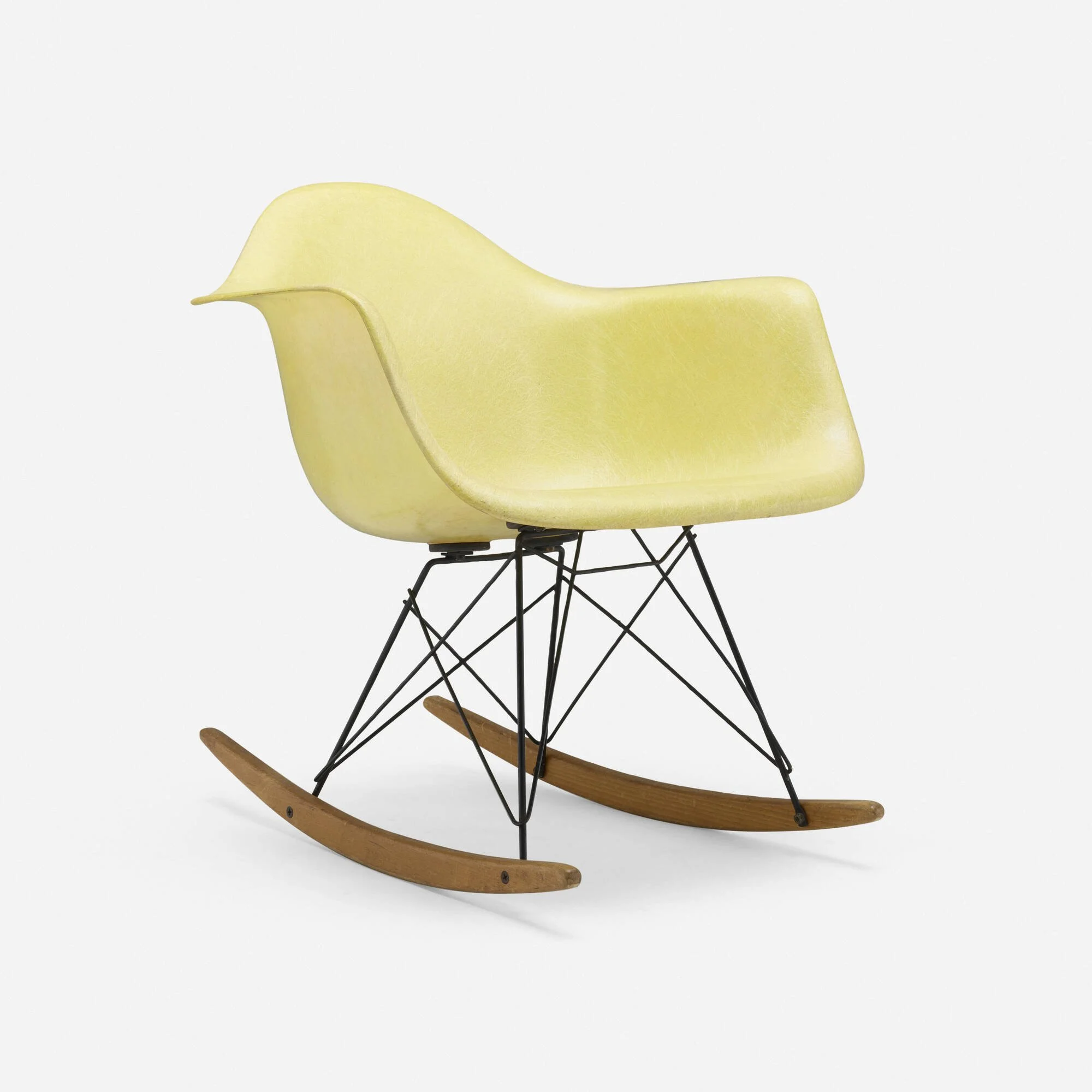
The RAR — Rocking Armchair on Rod base — was one of the original five base configurations Charles and Ray Eames offered when their fiberglass shell chair went into production in 1950. The rocking base was the most domestic of the options, designed to bring the same material innovation into the living room, the nursery, the reading corner. Herman Miller employees who had a child were given one to rock the newborn.
The earliest shells were molded by Zenith Plastics in Gardena, California, in a limited palette of five colors. Lemon yellow is among the most recognizable — a pale, warm tone that catches light through the translucent fiberglass, revealing the woven fiber structure beneath. First-generation shells are identifiable by the rope embedded at the rim, the oversized rubber shock mounts, and the high fiber content visible throughout.
This example comes from the collection of Mark McDonald, one of the foremost Eames collectors and dealers of the late twentieth century. His collection, sold at Rago in 2017, set benchmarks for what museum-quality Eames examples look like. The partial decal label to underside confirms Zenith Plastics production for Herman Miller.
Charles and Ray Eames · Herman Miller / Zenith Plastics Co. USA · 1950 Molded fiberglass, rope edge, birch, enameled steel 26¾"h × 24¾"w × 27¼"d (68 × 63 × 69 cm) Partial decal manufacturer's label to underside Provenance: Collection of Mark McDonald, New York
Interested in this piece? Reach out at josh@theprairiemodern.com or call/text 323.719.9242. Shipping and local delivery available — quoted per piece.