
 Image 1 of 5
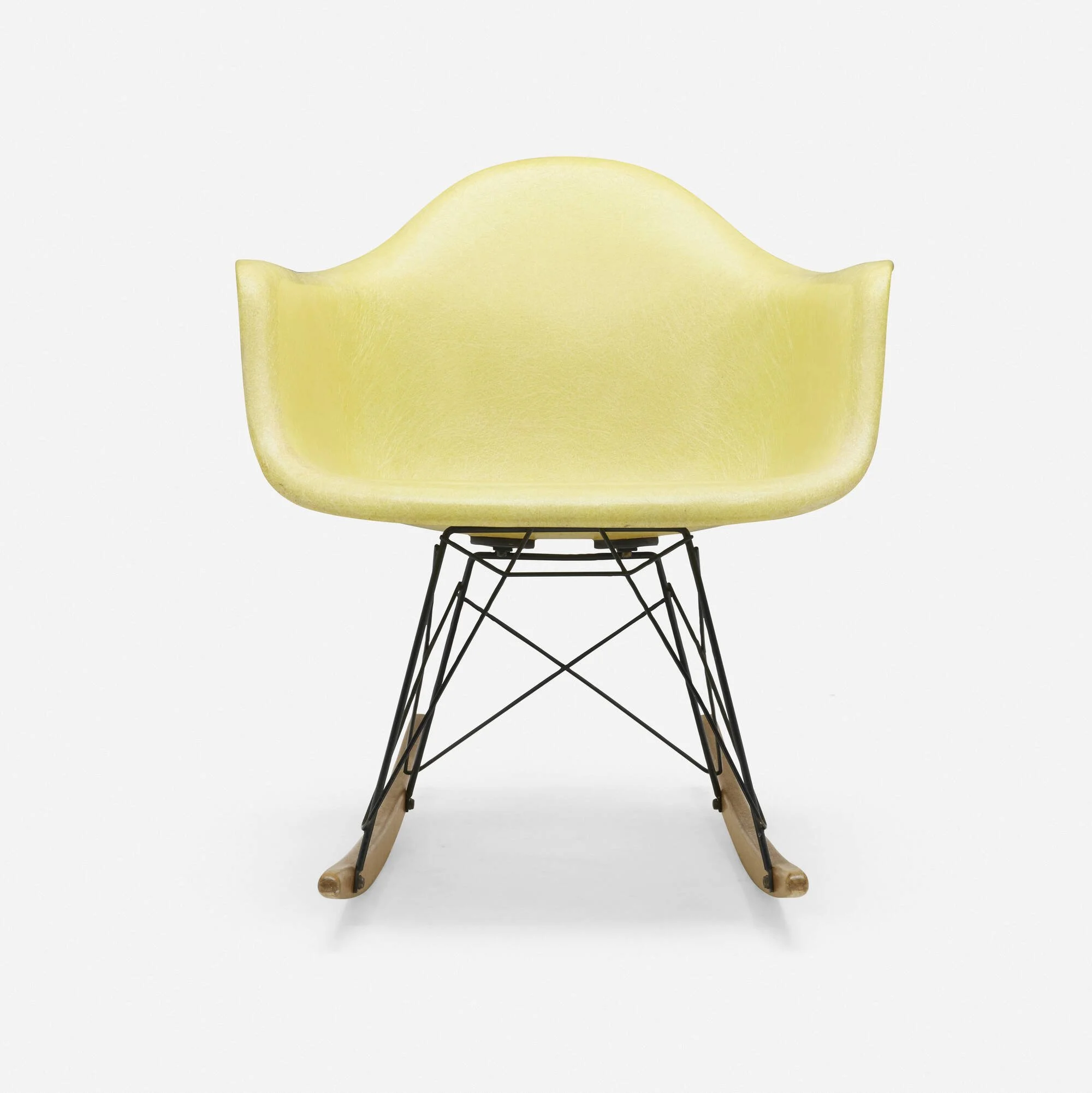 Image 2 of 5
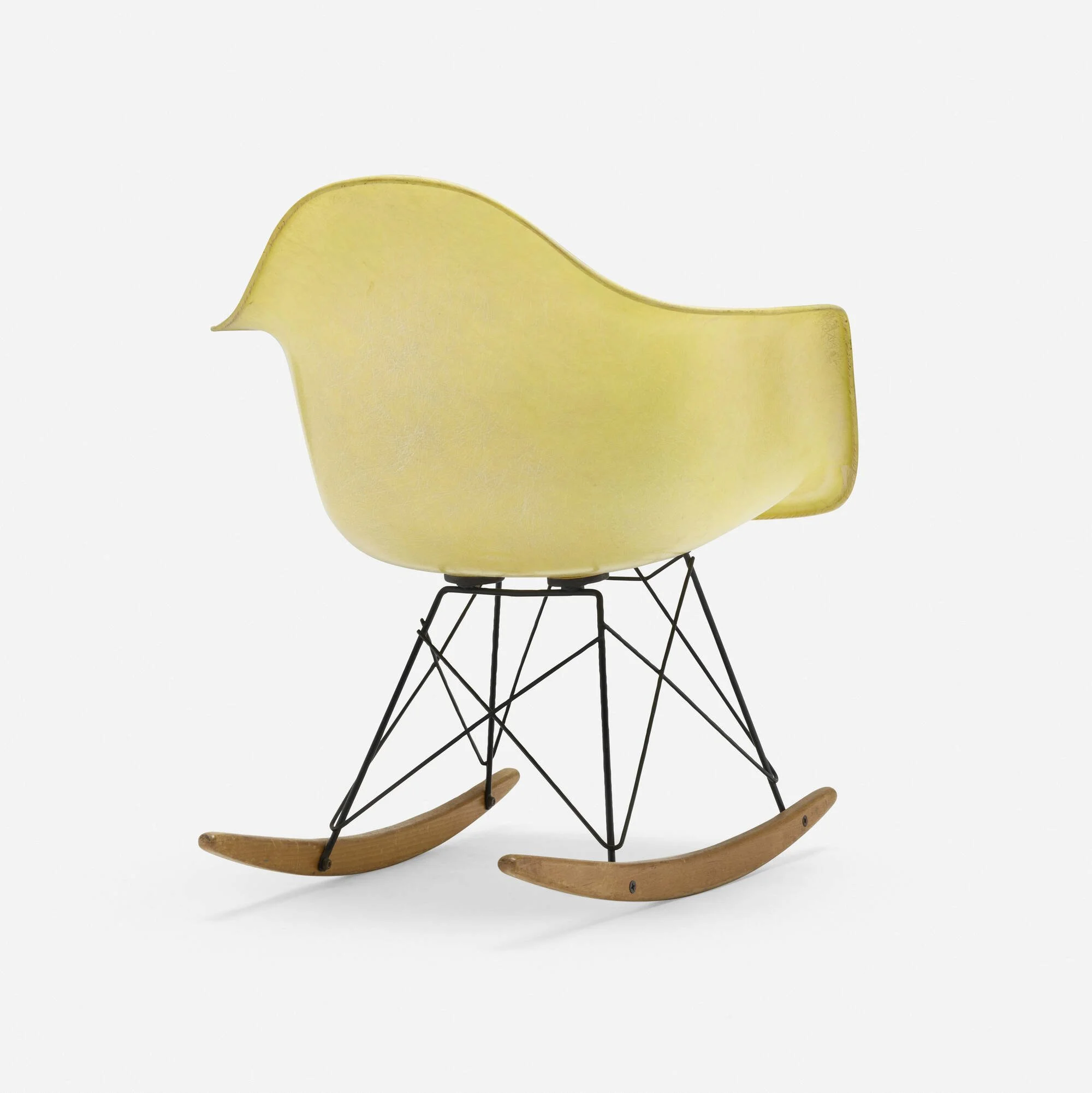 Image 3 of 5
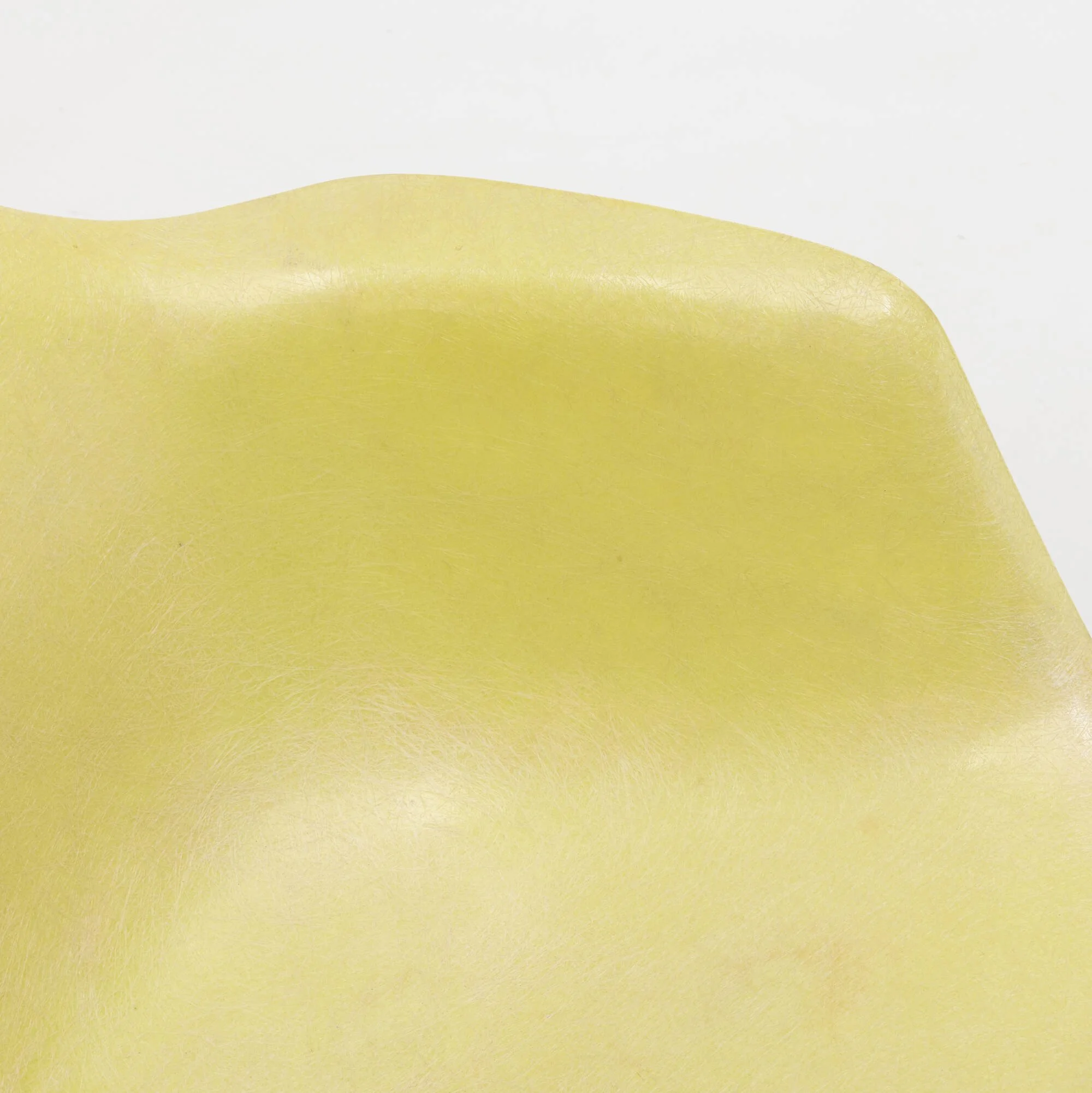 Image 4 of 5
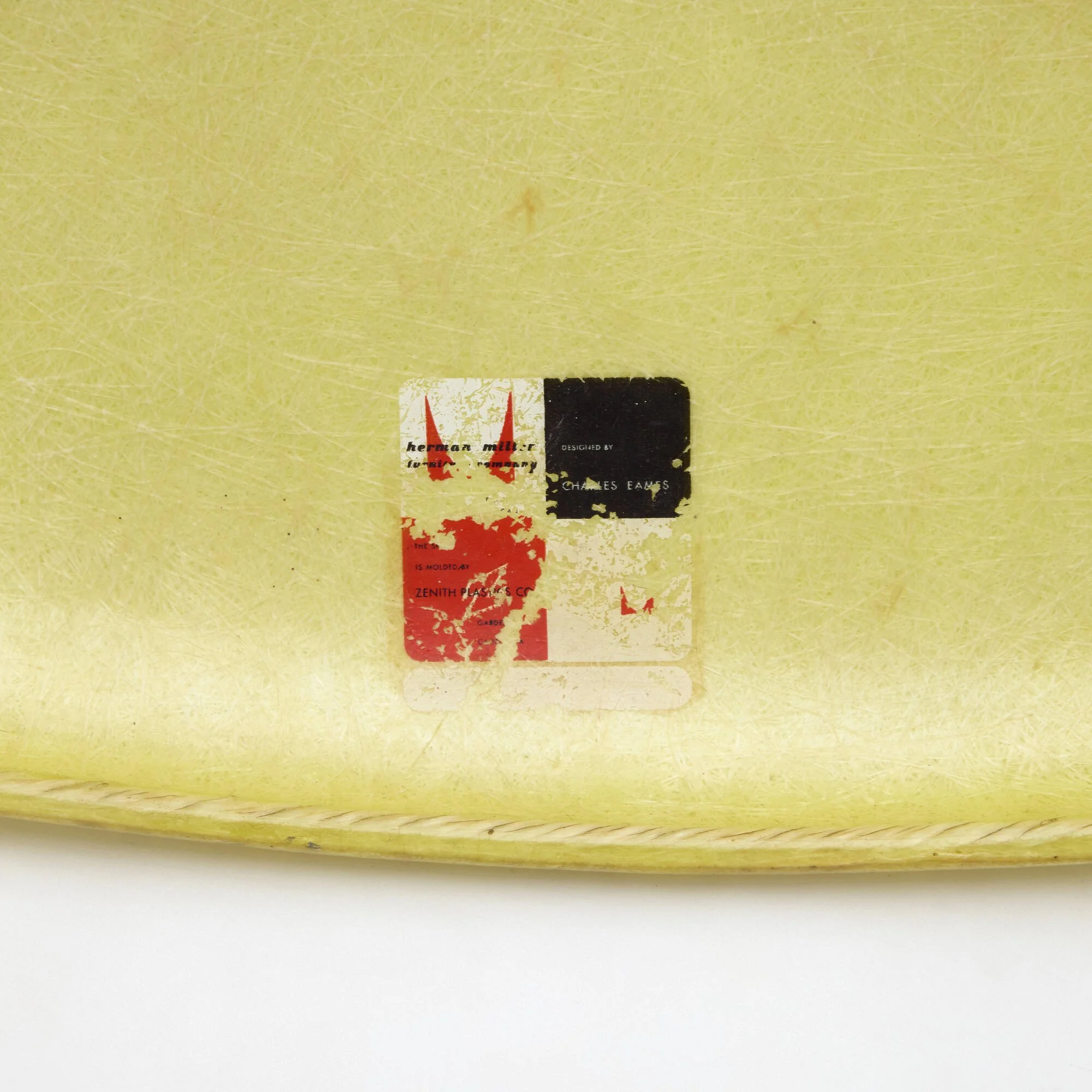 Image 5 of 5
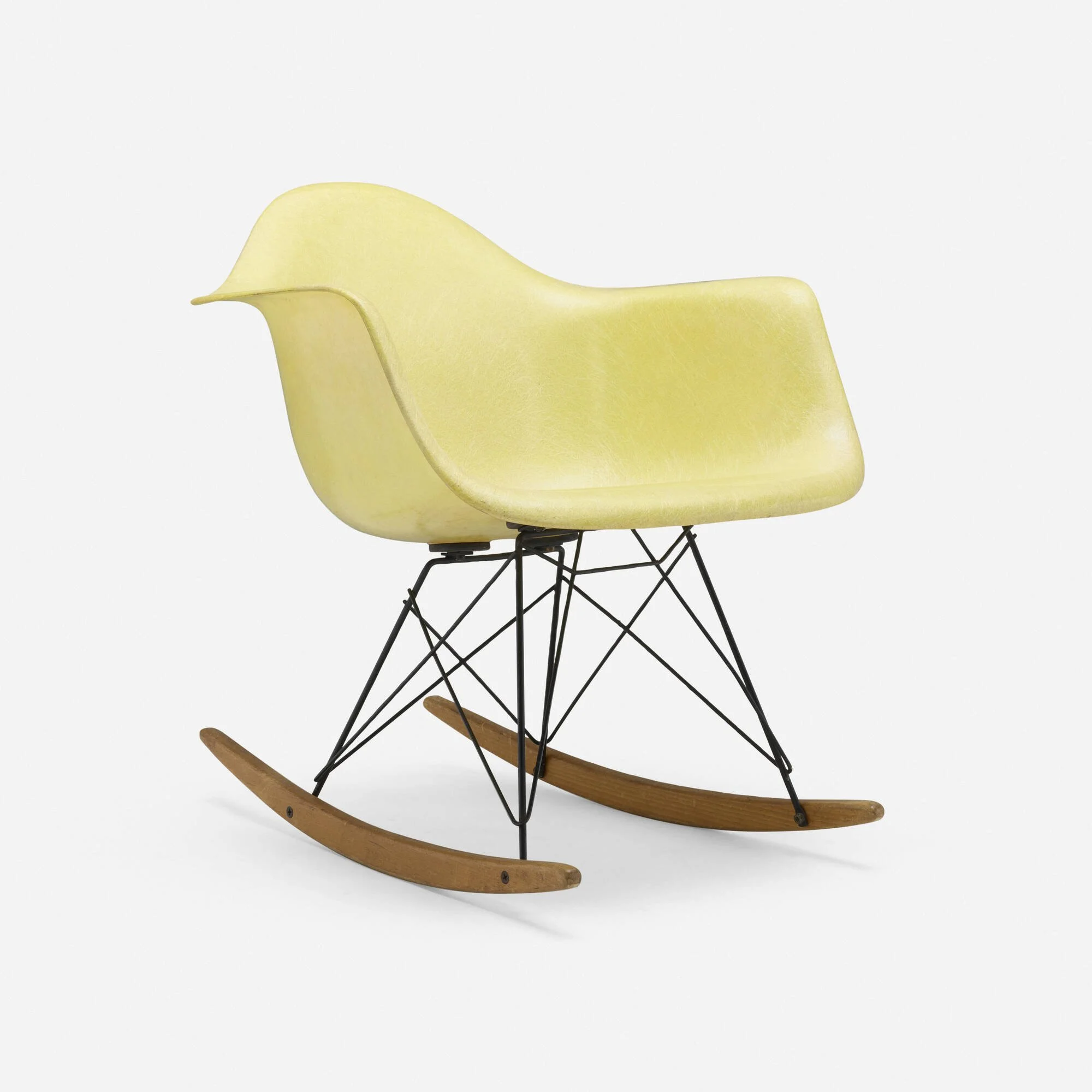
The RAR — Rocking Armchair on Rod base — was one of the original five base configurations Charles and Ray Eames offered when their fiberglass shell chair went into production in 1950. The rocking base was the most domestic of the options, designed to bring the same material innovation into the living room, the nursery, the reading corner. Herman Miller employees who had a child were given one to rock the newborn.
The earliest shells were molded by Zenith Plastics in Gardena, California, in a limited palette of five colors. Lemon yellow is among the most recognizable — a pale, warm tone that catches light through the translucent fiberglass, revealing the woven fiber structure beneath. First-generation shells are identifiable by the rope embedded at the rim, the oversized rubber shock mounts, and the high fiber content visible throughout.
This example comes from the collection of Mark McDonald, one of the foremost Eames collectors and dealers of the late twentieth century. His collection, sold at Rago in 2017, set benchmarks for what museum-quality Eames examples look like. The partial decal label to underside confirms Zenith Plastics production for Herman Miller.
Charles and Ray Eames · Herman Miller / Zenith Plastics Co. USA · 1950 Molded fiberglass, rope edge, birch, enameled steel 26¾"h × 24¾"w × 27¼"d (68 × 63 × 69 cm) Partial decal manufacturer's label to underside Provenance: Collection of Mark McDonald | Rago, The Hudson Years, 24 September 2017, Lot 1124 | Private Collection
The RAR — Rocking Armchair on Rod base — was one of the original five base configurations Charles and Ray Eames offered when their fiberglass shell chair went into production in 1950. The rocking base was the most domestic of the options, designed to bring the same material innovation into the living room, the nursery, the reading corner. Herman Miller employees who had a child were given one to rock the newborn.
The earliest shells were molded by Zenith Plastics in Gardena, California, in a limited palette of five colors. Lemon yellow is among the most recognizable — a pale, warm tone that catches light through the translucent fiberglass, revealing the woven fiber structure beneath. First-generation shells are identifiable by the rope embedded at the rim, the oversized rubber shock mounts, and the high fiber content visible throughout.
This example comes from the collection of Mark McDonald, one of the foremost Eames collectors and dealers of the late twentieth century. His collection, sold at Rago in 2017, set benchmarks for what museum-quality Eames examples look like. The partial decal label to underside confirms Zenith Plastics production for Herman Miller.
Charles and Ray Eames · Herman Miller / Zenith Plastics Co. USA · 1950 Molded fiberglass, rope edge, birch, enameled steel 26¾"h × 24¾"w × 27¼"d (68 × 63 × 69 cm) Partial decal manufacturer's label to underside Provenance: Collection of Mark McDonald | Rago, The Hudson Years, 24 September 2017, Lot 1124 | Private Collection