
 Image 1 of 5
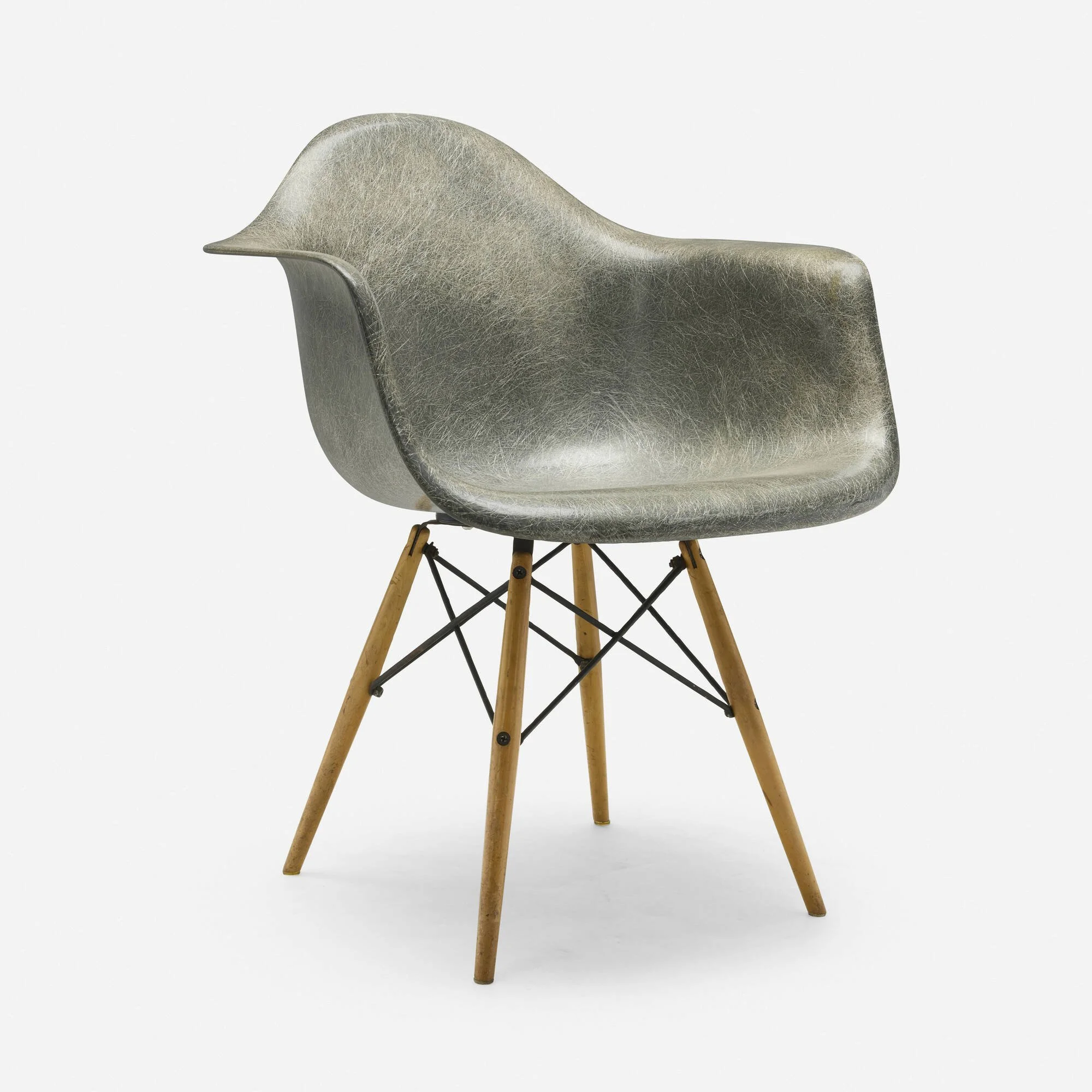 Image 2 of 5
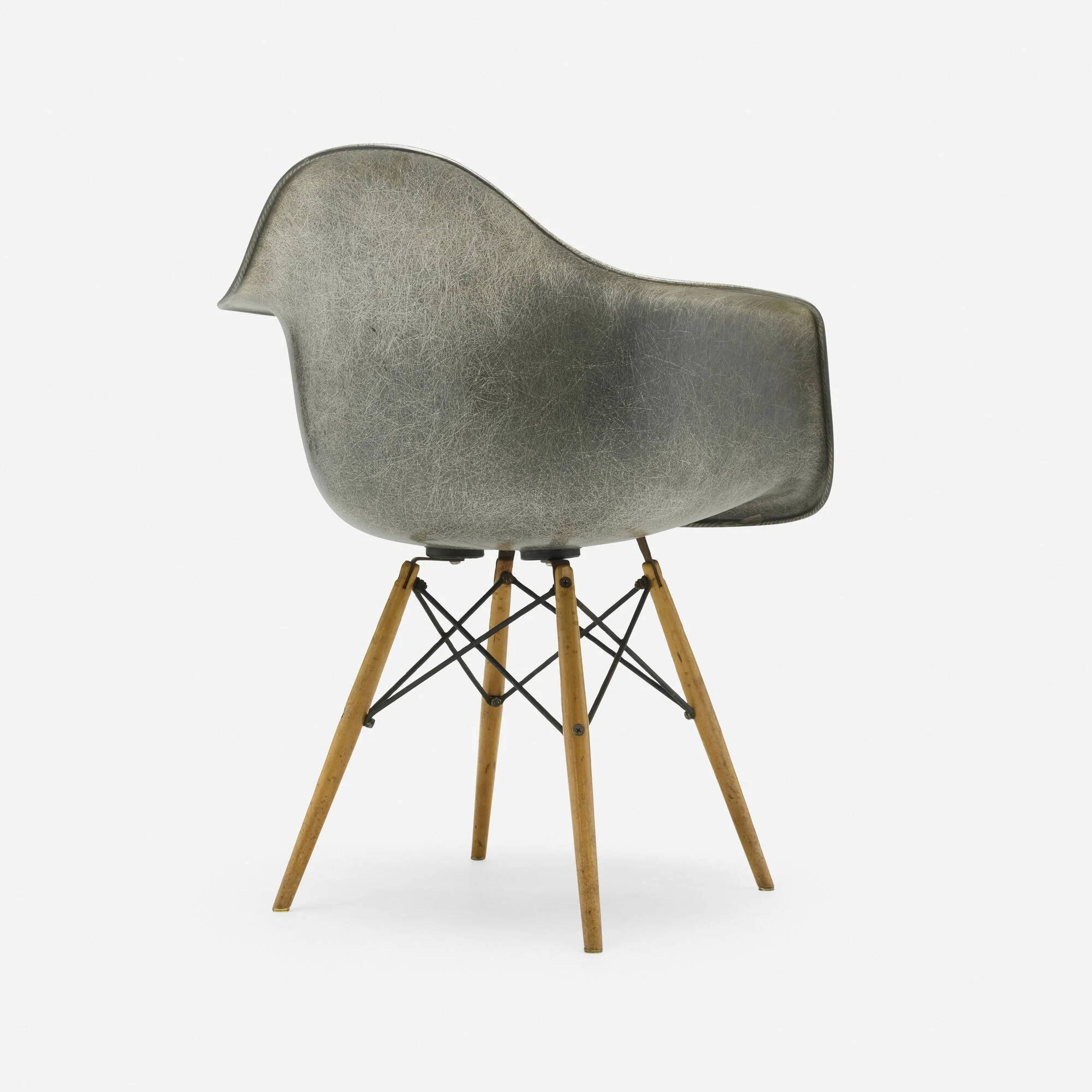 Image 3 of 5
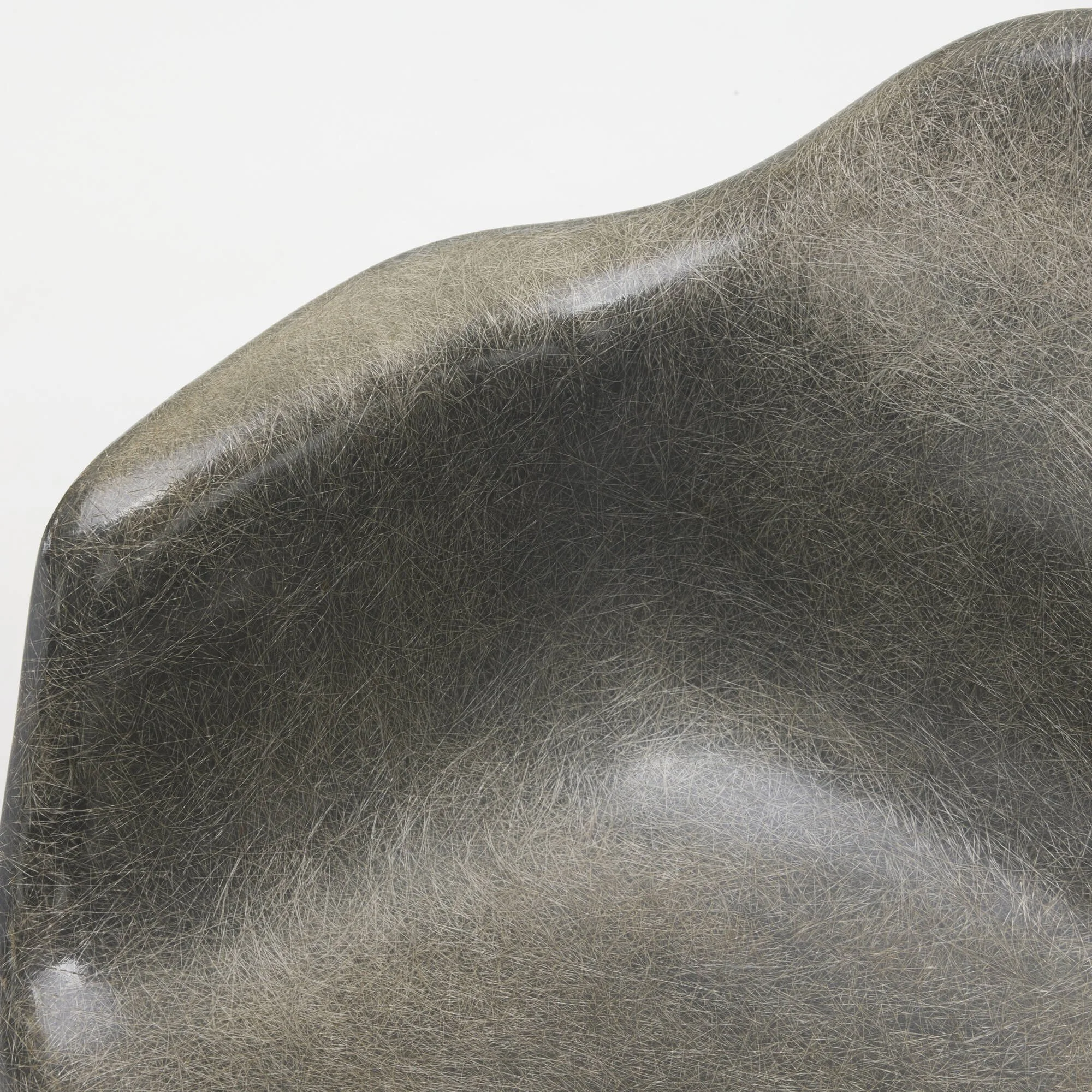 Image 4 of 5
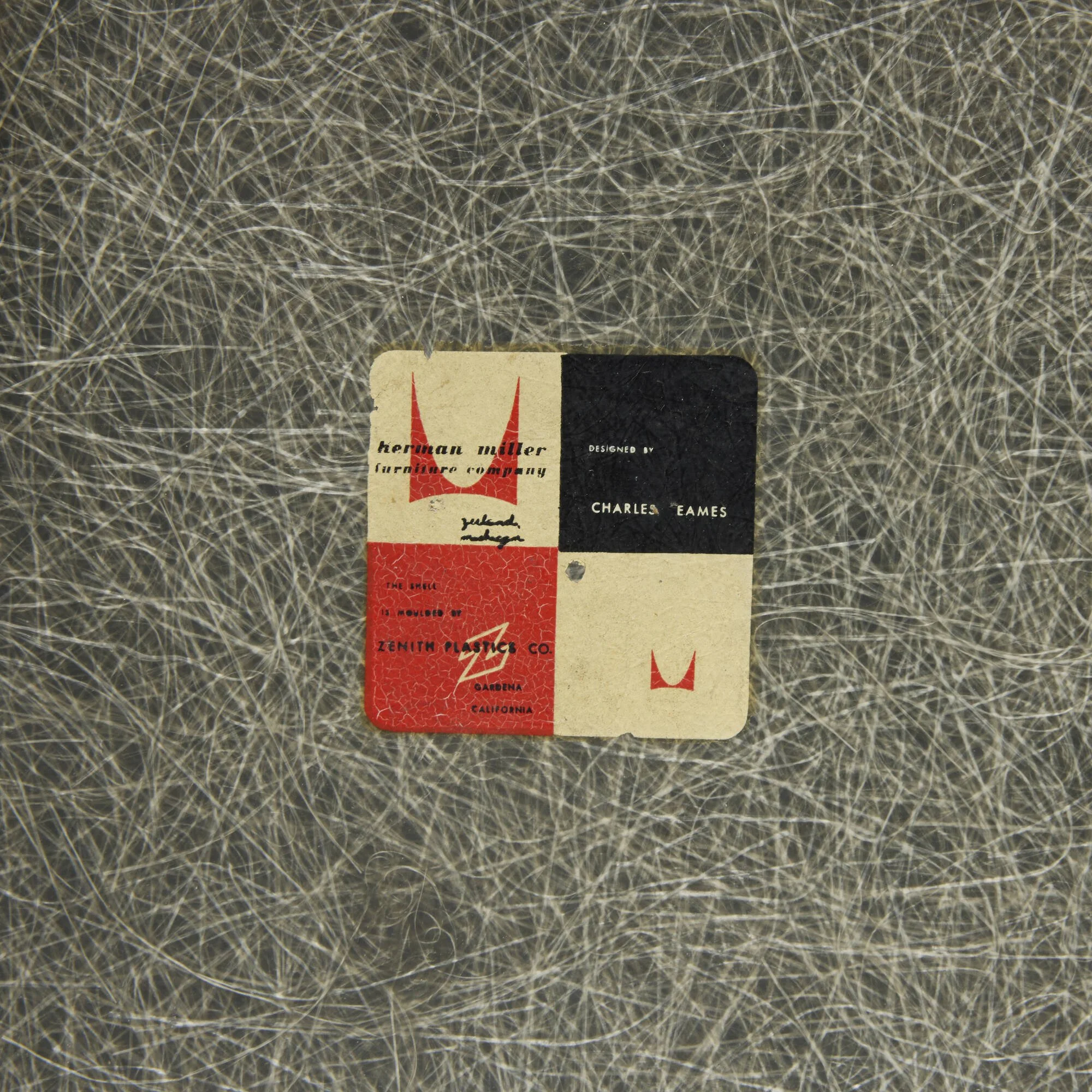 Image 5 of 5
Charles and Ray Eames entered their fiberglass shell chair in MoMA's 1948 "Low-Cost Furniture Design" competition — the idea was to make a beautiful, comfortable chair that anyone could afford. Production began in 1950 with Zenith Plastics molding the shells in Gardena, California. The earliest examples are distinctive: high fiber content visible through the translucent shell, oversized rubber shock mounts, and a rope embedded around the rim of the seat — a manufacturing artifact that became a collector's marker.
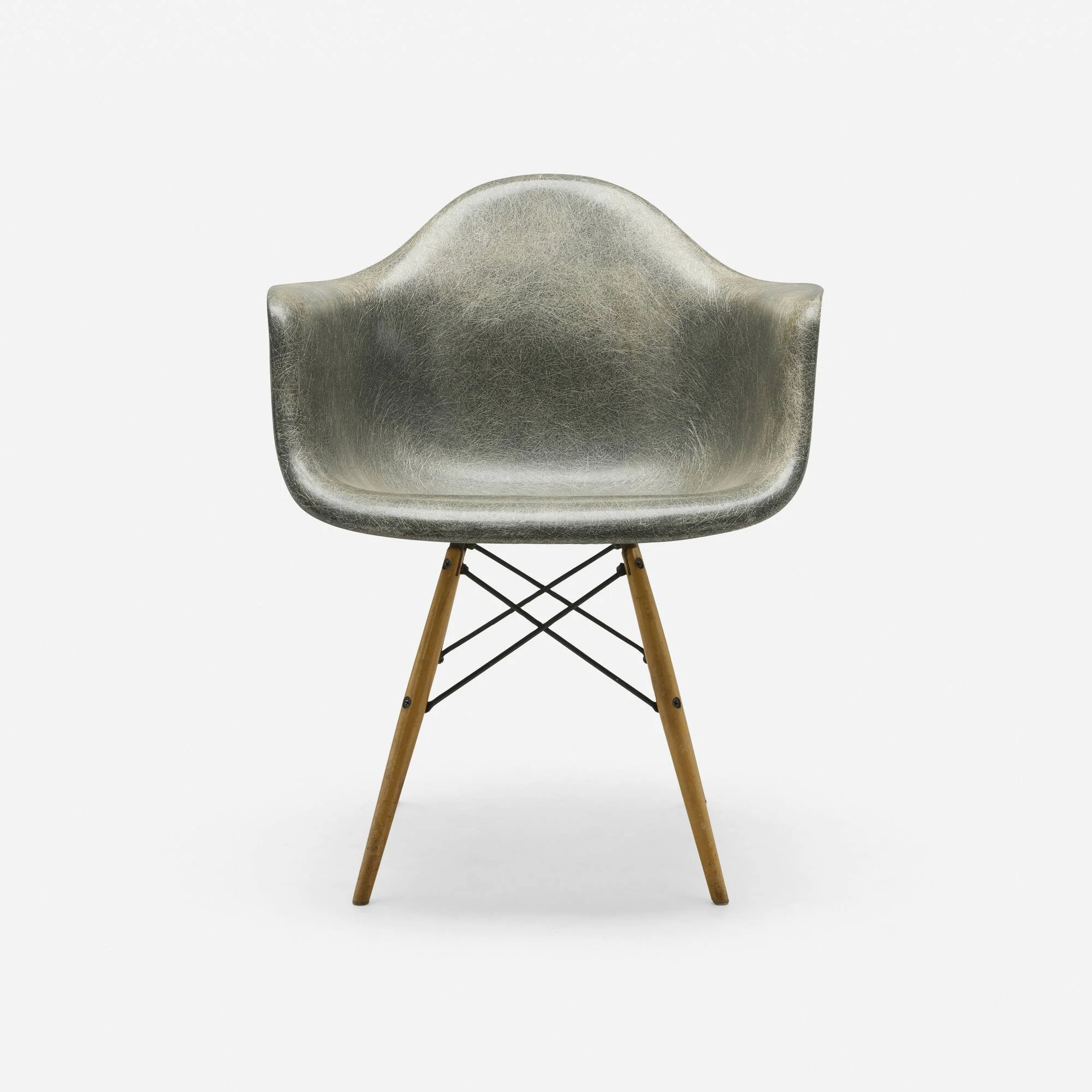
The DAW — Dining height, Arm, Wood base — pairs the fiberglass shell with birch dowel legs and enameled steel cross-struts. It's the warmest configuration in the shell chair family, the wood legs softening what could otherwise read as purely industrial.
This is a first-generation example with the Zenith Plastics decal and Herman Miller label intact. The elephant hide grey shell — one of the original Zenith colorways and among the most sought-after — shows the kind of honest aging that only real fiberglass develops, with subtle variations in tone and fiber visibility that no reproduction can fake.
Herman Miller / Zenith Plastics Co. · USA · 1951 Molded fiberglass, rope edge, birch, enameled steel 30½"h × 24¾"w × 23½"d (77 × 63 × 60 cm) Decal manufacturer's label to underside
Charles and Ray Eames entered their fiberglass shell chair in MoMA's 1948 "Low-Cost Furniture Design" competition — the idea was to make a beautiful, comfortable chair that anyone could afford. Production began in 1950 with Zenith Plastics molding the shells in Gardena, California. The earliest examples are distinctive: high fiber content visible through the translucent shell, oversized rubber shock mounts, and a rope embedded around the rim of the seat — a manufacturing artifact that became a collector's marker.
The DAW — Dining height, Arm, Wood base — pairs the fiberglass shell with birch dowel legs and enameled steel cross-struts. It's the warmest configuration in the shell chair family, the wood legs softening what could otherwise read as purely industrial.
This is a first-generation example with the Zenith Plastics decal and Herman Miller label intact. The elephant hide grey shell — one of the original Zenith colorways and among the most sought-after — shows the kind of honest aging that only real fiberglass develops, with subtle variations in tone and fiber visibility that no reproduction can fake.
Herman Miller / Zenith Plastics Co. · USA · 1951 Molded fiberglass, rope edge, birch, enameled steel 30½"h × 24¾"w × 23½"d (77 × 63 × 60 cm) Decal manufacturer's label to underside